


Five years ago, most conversations about blockchain solutions in finance felt like science fiction. Today, banks, FinTechs, and even traditional asset managers are quietly running real blockchain projects that are saving them millions and shaving days off processes that used to drag on forever.
Why Finance Can’t Ignore Blockchain Solutions Anymore
Old-school finance runs on trust-but-verify systems with lots of middlemen, faxed documents, and databases that don’t talk to each other. Every extra step cost time and money and creates places for things to go wrong.
Blockchain solutions fix the “single source of truth” problem. Everyone looks at the same immutable ledger. No more “your system says X, mine says Y” arguments. Settlements that used to take two days now take minutes. That’s not marketing fluff; that’s what’s live today.
Use Cases of Blockchain: Solutions That Are Already Live and Paying Off in Finance

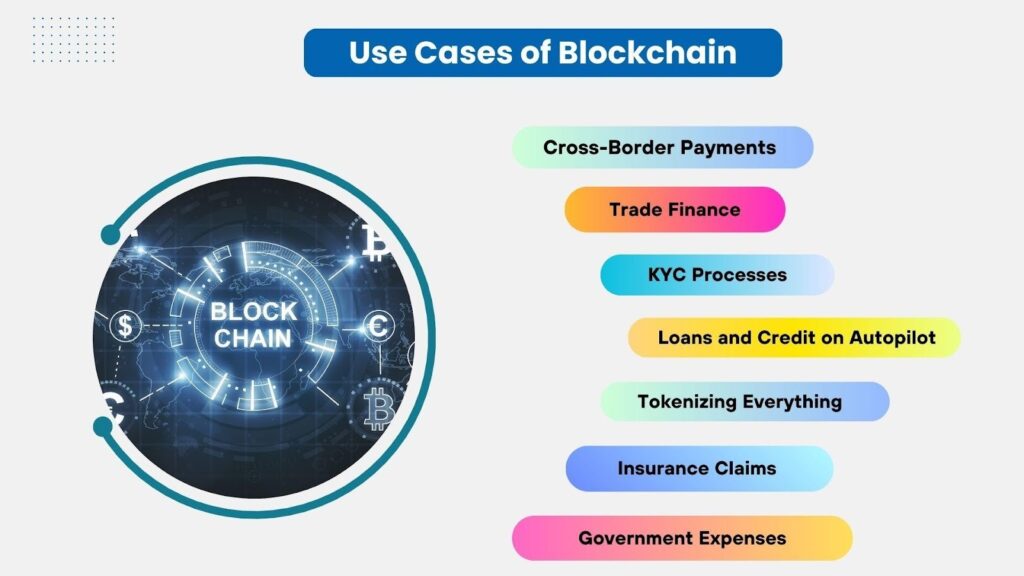
Blockchain development services are already helping businesses succeed:
- Cross-Border Payments
Sending money from the U.S. to Europe or Asia used to take 2–5 days and cost a painful percentage. Now there are networks (RippleNet, Stellar, JPM Coin, etc.) moving real money in seconds for pennies. Companies have literally cut their treasury teams’ workload in half.
- Trade Finance – Finally Leaving the 1980s
Letters of credit and bills of lading used to live on paper shipped around the world. Platforms like we.trade and Marco Polo have moved the whole process onto blockchain. The shift has led banks from 45 days to 4 hours to finance a shipment.
- KYC That Doesn’t Irritate Customers
Verify once, share securely with permission. A few consortia (e.g., KYC Chain, Synaps) already let banks reuse verified customer data. Onboarding time drops from weeks to hours, and you’re not asking the same poor customer for the same passport scan twelve times.
- Loans and Credit on Autopilot
Smart contracts are boring until you see one release collateral the instant a loan is repaid. No waiting for someone in operation to press the button on Tuesday when they’re back from vacation.
- Tokenizing Everything
Real estate funds are selling fractions of an apartment building in Lisbon. Private equity funds are letting smaller investors in for $10k instead of $5M. Bonds settling same-day instead of T+2. It’s all live. BlackRock, Fidelity, and Hamilton Lane aren’t playing around; they’re doing it.
- Insurance Claims That Actually Pay Out Fast
Parametric insurance on blockchain is glorious. Crop fails → satellite confirms drought → payout hits the farmer’s wallet in hours, not months. Lemonade and Etherisc have been doing this for years.
- Government Expenses
Global governments are now leveraging digital methods to improve their legal processes and build better relationships with their citizens.
Where AI & Blockchain Get Ridiculously Powerful?
(How AI & Blockchain Working Together to Provide Powerful Solutions?)
Blockchain solutions give you perfect, tamper-proof data. AI solutions love perfect data. Put them together, and magic happens:
- Fraud detection on steroids
Traditional systems look at maybe 5–10 % of transactions in depth because the rest is too slow or expensive to process. On a decent blockchain, the AI literally sees every single transaction the moment it happens. I’ve seen models trained on Ethereum and Solana data catch brand-new mule-account patterns in under seven minutes – stuff that used to take fraud teams two weeks and a lot of coffee.
- Credit scoring for the “invisible” half of the planet
Roughly two billion adults have no FICO or Equifax file. But a lot of them pay rent with stablecoins, get paid in USDC for freelance gigs, or run a small Shopify store settled on-chain. Pull 12 months of that cash-flow history (verified, granular, and permissioned by the user), and the AI can spit out a credit score more accurate than anything built on 1990s bureau data. We’ve seen default rates drop 40–60 % in micro-lending pilots in LatAm and Southeast Asia doing exactly this.
- Trading and risk models that don’t lie to themselves
Portfolio managers and quant funds used to spend half their lives reconciling data feeds. Now they point their models at a blockchain oracle or a private node and get sub-second, provable prices and positions. The use of predictive analytics in fintech has made it possible for financial institutes to make better decisions. One hedge fund cut its end-of-day reconciliation team from 18 people to two, thanks to the innovation.
- Autonomous Everything
Combine on-chain data with AI agents, and you get things that feel like sci-fi today but are already in private beta: an AI that rebalances collateral across DeFi protocols faster than any human could, or an insurance underwriter that adjusts premiums in real time based on IoT sensor data settled on-chain. No human in the loop, no weekend delays, no “we’ll process that on Monday.”
Artificial intelligence services flag suspicious patterns on a blockchain ledger minutes after they happen; patterns that would have taken weeks to spot in the old system. The compliance team gets an alert with all the proof neatly packaged. The case was closed before anyone even finished their lunch.
When people say “AI + blockchain is the combo,” this is what they actually mean. Not marketing slides, but systems that make humans look slow and expensive by comparison.
How to Get Started with Blockchain Solutions?
Most companies don’t need to “blockchain everything.” They pick one pain point that’s costing them serious money and fix that first.
Typical first projects are:
- A cross-border payment corridor that’s bleeding fees
- A manual KYC/AML process everyone hates
- Trade finance deals that take 30+ days
- Tokenizing a fund to open it to smaller investors
Start small, prove the ROI, then scale. The tech is ready. The bigger challenge is usually change management and finding people who speak both “finance” and “blockchain” fluently.
What are Some Common Challenges for Implementing Blockchain Solutions?
Regulation is patchy, public blockchains can be slow and expensive at scale, and integrating with 40-year-old mainframes is exactly as fun as it sounds. But none of these are stifling anymore as private/permissioned chains, layer-2 solutions, and good architects solve most of it. Leveraging the correct AI-powered fintech solutions development company can help you bypass all these issues.
Bottom Line
Blockchain solutions stopped being the “future of finance” sometime around 2022–2023. It’s current-day finance for anyone who’s serious about speed, cost, and trust.
If you’re still treating it like an experiment, that’s fine, but just know your competitors probably aren’t. Combining it with AI is when things actually get interesting.
Curious where it makes sense for your business? Get in touch with blockchain consulting services providers who also excel in AI/ML solutions and let your business shine.