
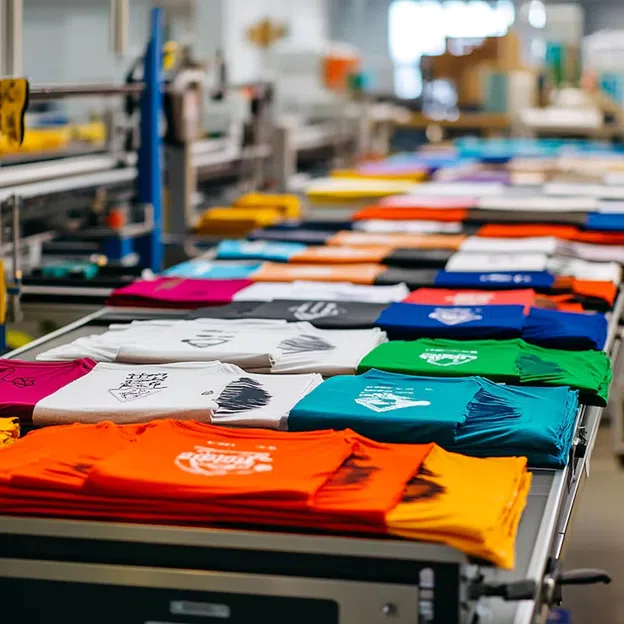
Merch fulfillment services for companies streamline the storage, handling, and delivery of branded merchandise, ensuring timely and accurate distribution while maintaining consistent quality.
Many businesses struggle to manage inventory, shipping, and logistics for branded merchandise, leading to delays, errors, and wasted budget. Without a professional fulfillment approach, programs suffer from inconsistent branding, low employee engagement, and dissatisfied clients. Solution: This article explains how merch fulfillment services help companies optimize operations, maintain quality, and maximize the impact of their branded merchandise.
Main Takeaways
- Centralized fulfillment reduces errors and delivery delays.
- Professional inventory management ensures stock availability and consistency.
- Customizable distribution options improve efficiency for teams and clients.
- Scalable fulfillment services adapt to company growth and campaign demands.
Understanding Merch Fulfillment Services
Merch fulfillment services for companies involve professional handling of branded products, including storage, order processing, packaging, and shipping. By outsourcing fulfillment, businesses can focus on strategy and engagement while ensuring reliable delivery.
Key Components
- Centralized warehouse storage and inventory tracking
- Automated order processing and batch fulfillment
- Packaging customization for brand consistency
- Shipping and delivery coordination to employees, clients, or event attendees
Benefits
Utilizing fulfillment services provides:
- Accurate, on-time delivery to all recipients
- Reduced administrative burden for internal teams
- Improved brand consistency across items and campaigns
- Data and reporting to optimize future merchandise strategies
Ranking of Fulfillment Service Models
Different fulfillment approaches vary in control, scalability, and engagement effectiveness. Expert evaluation ranks them as follows:
1. Full-Service Fulfillment
Overview: Vendor manages storage, packing, and shipping from start to finish. Pros: Minimal internal effort, consistent quality, scalable. Cons: Higher cost than partial fulfillment. Ideal Use: Large corporations with ongoing merchandise programs.
2. Partial Fulfillment Support
Overview: Vendor handles specific stages such as shipping or packaging, while the company manages inventory and order tracking. Pros: Retains some internal control, reduces logistical workload. Cons: Requires internal coordination and oversight. Ideal Use: Medium-sized businesses seeking partial outsourcing.
3. Hybrid Fulfillment Programs
Overview: Combines internal management of inventory or order processing with vendor support for shipping and packaging. Pros: Balance of control, quality, and efficiency. Cons: Coordination-intensive. Ideal Use: Scaling companies with multiple campaigns or teams.
4. Event-Specific Fulfillment
Overview: Focused fulfillment for short-term campaigns, launches, or special events. Pros: High engagement and timely delivery for specific initiatives. Cons: Limited scalability, one-time program focus. Ideal Use: Special campaigns or seasonal merchandise drops.
5. On-Demand Fulfillment
Overview: Merchandise is printed, packaged, and shipped as orders come in. Pros: Reduces storage costs, allows dynamic inventory. Cons: Limited batch efficiency, potential delays for high-volume orders. Ideal Use: Flexible or small-scale programs with variable demand.
Product Considerations
Apparel
Focus on fabrics that hold up under multiple washes, maintain shape, and ensure comfortable wear. Common choices include cotton, polyester blends, and sustainable fabrics. Pre-shipment inspection ensures consistency and durability.
Accessories and Non-Apparel Items
Ensure usability, durability, and proper branding. Items like mugs, tech accessories, and office supplies must meet functional expectations while reflecting the company’s identity.
Quick Comparison Table
This table provides a practical overview of fulfillment models to guide decision-making.
| Fulfillment Model | Control | Quality | Scalability | Ideal Use | Notes |
| Full-Service | Medium | High | High | Large corporations | Turnkey solution, minimal internal work |
| Partial Support | High | High | Medium–High | Medium-sized businesses | Vendor handles logistics, company retains oversight |
| Hybrid | Medium–High | High | Medium–High | Scaling companies | Balances control and outsourcing |
| Event-Specific | Medium | High | Low | Campaigns or events | Exclusive, time-bound fulfillment |
| On-Demand | Low–Medium | Medium | Medium | Small-scale or flexible programs | Dynamic inventory, variable order volumes |
Expert Insights
Inventory Management
Maintain accurate stock counts using centralized databases and automated tracking. This reduces errors and prevents out-of-stock situations, improving reliability.
Packaging and Shipping Standards
Standardized packaging ensures brand consistency and protects items during transit. Batch processing and pre-verified shipping labels reduce errors and delays.
Program Scalability
Choose fulfillment partners capable of handling both seasonal spikes and long-term growth, ensuring consistent delivery regardless of order volume.
Practical Tips
- Plan inventory levels based on historical demand and seasonal trends.
- Implement batch or automated order processing for efficiency.
- Use pre-shipment quality checks to maintain brand integrity.
- Track shipping and delivery metrics to evaluate fulfillment performance.
- Maintain flexibility for emergency or last-minute orders.
Recap
- Merch fulfillment services simplify distribution, improve accuracy, and maintain brand quality.
- Service models should align with company size, campaign frequency, and internal capacity.
- Quality control, packaging standards, and inventory management are key to success.
- Comparison table helps companies select the right fulfillment approach for their needs.
- Monitoring metrics ensures continuous improvement and ROI for merchandise programs.
FAQs About Merch Fulfillment Services for Companies
What do merch fulfillment services include?
They include storage, inventory management, order processing, packaging, and shipping, ensuring consistent and timely delivery of branded merchandise.
Can MFG Merch handle large-volume campaigns?
Yes. MFG Merch offers scalable fulfillment systems capable of managing high-volume orders while maintaining quality and efficiency.
How is brand consistency maintained during fulfillment?
Through standardized packaging, pre-shipment inspections, and strict quality control, ensuring each item accurately reflects corporate branding.
Is on-demand fulfillment possible?
Yes. On-demand fulfillment allows items to be produced and shipped as orders come in, reducing storage costs and adapting to variable demand.
Why choose MFG Merch for fulfillment services?
MFG Merch provides professional, end-to-end fulfillment solutions that streamline operations, reduce errors, and enhance employee and client engagement.